Loading...
First Round of Abstract Submission Ends: Dec 31, 2026
Extended Early Bird Ends: Sep 28, 2026

Plenary Speakers

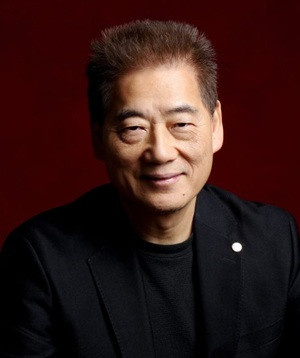
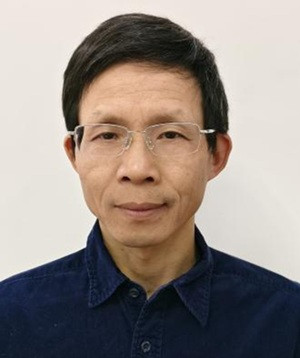
Prof. Chao-Jun Li
McGill University, Canada
Title: Catalysis Towards Green Synthesis
Prof. Chao-Jun Li received his Ph.D. at McGill University (1992), and was an NSERC Postdoctoral Fellow at Stanford University (US) (1992-94). He was an Assistant (1994), Associate (1998), and Full Professor (2000) at Tulane University (US). Since 2003, he has been the Canada Research Chair (Tier I) in Green Chemistry, E. B. Eddy Chair Professor of Chemistry, and the Distinguished James McGill Chair Professor at McGill University. He was the founding Co-Chair of the Canadian Green Chemistry and Engineering Network (2007), served as the Director of the NSERC CREATE Center for Green Chemistry (2009-2016), the Director of CFI Infrastructure for Green Chemistry and Green Chemicals (2009-2024), and the Co-Director for Quebec’s FQRNT Center for Green Chemistry and Catalysis since 2009. He was a pioneer in using water as a green solvent and a global leader in developing Green Chemistry for chemical synthesis. He received a US NSF’s CAREER Award (1997), US Presidential Green Chemistry Challenge Award (2001), 2010 Canadian Green Chemistry and Engineering Award, 2015 R. U. Lemieux Award and 2018 Alfred Bader Award of the Canadian Chemical Society, the 2020 Catalysis Award and the 2022 CIC Medal of the Chemical Institute of Canada, the 2021 Alexander von Humboldt Research Award, the 2025 Palladium Global Science Award, the 2002 JSPS Senior Fellow, and the 2018 Killam Research Fellow of the Canadian Council of Arts among others. Dr. Li was elected as a Fellow of the Royal Society of Canada (Academy of Sciences) (2012), the Canadian Academy of Engineering (2025), The World Academy of Sciences (TWAS) (2016), the European Academy of Sciences (2020), the Royal Society of Chemistry (UK) (2007), the American Association for the Advancement of Science (AAAS) (2012), the Chemical Institute of Canada (2013), the American Chemical Society (ACS) (2015), and the Chinese Chemical Society (2020). In 2007, the Canadian Chemical News listed Dr. Li’s research as among the top 20 most important Canadian chemistry discoveries of the past century. He was a highly cited researcher by Thomson Reuters/Clarivate Analytics (2014-2017) (>68,000, h-index 128). He was ranked #1 for "Bond Formation" in the world by Research.Com and ScholarGPS®, and the world top 0.05% scientist (#10 in organic chemistry) in the Stanford Ranking. He is on the UNIDO (United Nation) Global GreenChem Network Steering Committee and a Founding Board Member of the International Green Chemistry Consortium. He co-crafted the “Stockholm Declaration of Chemistry for the Future” by the Nobel Foundation in 2025.
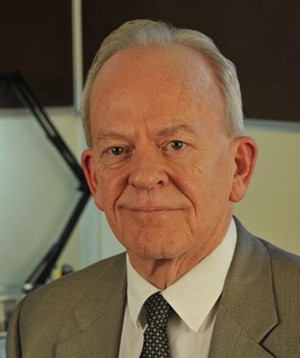
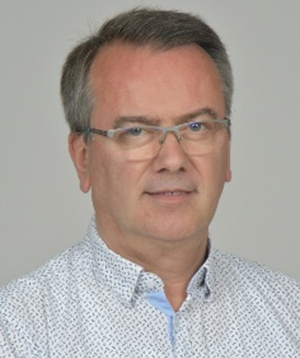
Prof. James Clark
University of York, UK
Title: Green Chemistry for a Circular Economy
James Clark is widely recognised as internationally leading in his work on sustainability and the circular economy. His work and his achievements cut across research, commercialisation, education and he has won international acclaim in all these areas. He was (Founding) Director of the Green Chemistry Centre of Excellence and the Bio-renewables Development Centre and is as Chair Professor at Fudan University in China. He has set up several spin-out companies operating in the UK and Ireland. His activities are worldwide and with honours and distinctions from many countries including Belgium, Germany, Portugal, South Africa, and Sweden. He has started and led some of the most important green and sustainable chemistry initiatives in the world including the world’s first journal, international network and graduate course. He has published over 700 articles (h-index 105) and has won awards for his research and commercialisation from the Royal Society of Chemistry, the Society of Chemical Industry and the EU including the European Sustainable Chemistry prize.
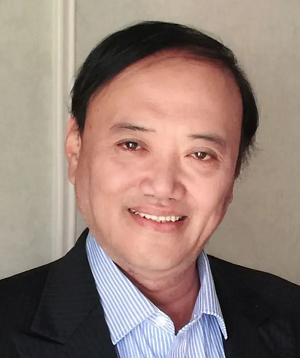
Prof. Jun-Jie Zhu
Nanjing University, China
Title: Electrochemiluminescence Imaging for Analytical Application
Dr. Jun-Jie Zhu has long been working on nano-bioanalytical chemistry, including the synthesis of functional nanoparticles, biological and biomedical applications of nanoparticles, electrochemical and fluorescence biosensors. Research in zhu laboratory is multidisciplinary involving chemistry, nanotechnology, surfaces, sensors, and bio-application. The group is particularly interested in scientific questions and challenges at the interface involving chemistry, materials, and biology for which they have been trying to come up with innovative solutions and insights. From a technical viewpoint, they have been developing over the years varied bioanalytical chemical platforms aimed at illuminating important molecular aspects in biology. Such systems have included electrochemistry, electrochemiluminescence and fluorescence from functional nanomaterials. In addition, they have developed and demonstrated diverse nanomaterial systems employed in cancer cell imaging, intracellular ROS detection, therapeutic applications, and others. This potentially paradigm-changing phenomena are extensively studied currently in the laboratory using different biological and chemical tools.
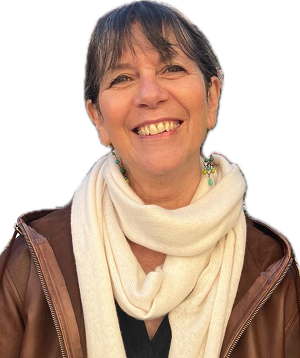
Dr. Elisabeth Lojou
CNRS-Aix-Marseille University, France
Title: How to interface enzymes with electrodes for bioelectrocatalysis?
Dr. Elisabeth Lojou is a CNRS Research Director and leads the Bioelectrochemistry, Biointerface and Biotechnology group at CNRS-Aix-Marseille University, France. Trained as a chemical engineer, she initially worked on lithium batteries before moving into bioelectrochemistry in 1995. Her research focuses on electron transfer between proteins and electrochemical interfaces, based on the concept that electrodes must be functionalized to mimic the physiological partner recognition for efficient interfacial electron transfer. A major contribution of her work is the identification of the molecular parameters governing enzyme immobilization for bioelectrocatalysis, particularly involving hydrogenases and multicopper oxidases, including the roles of orientation, surface charges, and environmental effects on activity and stability. She also developed advanced in situ and operando methodologies to correlate enzyme structure with function, opening new directions in copper-related bioelectrochemistry and enzyme metalation. Her work has applications in metal bioremediation, hydrogen sensing, and mediator-free H₂/O₂ enzymatic fuel cells. Beyond research, she is actively involved in scientific societies (ISE, BES, Groupe Français de Bioélectrochimie), assessment and editorial work, and contributes to mentoring and promoting gender balance in science. https://bip.cnrs.fr/groups/bip08/
Prof. Jian-Jiang Zhong
Shanghai Jiao Tong University, China
Title: Advances of Biochemical Engineering in the Synthetic Biology Era
Dr. JJ Zhong is a distinguished professor at Shanghai Jiao Tong University, a top university in China. He has been working on biochemical engineering (including bioreactor and fermentation engineering, bio-catalysis, synthetic biology and metabolic engineering) for over 30 years, and has published over 270 papers in peer-reviewed international journals. He was awarded the Cheung Kong Scholar Professorship from the Ministry of Education (MOE), National Science Fund for Distinguished Young Scholars by National Natural Science Foundation of China, the inaugural award of "Young Asian Biotechnologist Prize" by the Society for Biotechnology (Japan), the 1st-class Prize for Advancement of Science & Technology by MOE for twice (in 2004 & 2014), and the "Research Exchange Award" from the Korean Society for Biotechnology and Bioengineering. He is on the editorial board of 10 SCI-cited international journals, including as AE of Biotechnology & Bioengineering, Process Biochemistry, and Bioprocess and Biosystems Engineering, and was a plenary/invited speaker in about 90 international conferences.
Prof. Alain Walcarius
CNRS & Lorraine University, Nancy, France
Title: Electrogeneration and applications of oriented mesoporous silica films
Alain Walcarius has been active in research fields at the intersection between electrochemistry, analytical chemistry and materials science. After a PhD degree in Belgium and a postdoctoral stay in USA, he joined the National Center for Scientific Research (CNRS, France) in 1996 as a Research Associate. He is currently Director of Research at the Laboratory of Physical Chemistry and Microbiology for the Materials and the Environment (LCPME, CNRS & Lorraine University, Nancy, France) and Scientific Officer at the Chemistry Institute of CNRS in Paris. His electrochemistry group works in the area of chemical reactions at solid/liquid interfaces, and his main recent scientific contributions concern the electrochemistry of sol-gel and mesoporous materials, especially silica-based organic–inorganic hybrids, with applications in the field of electrochemical reactors and sensors. He is author/co-author of more than 330 publications in peer-reviewed journals and has given over 130 invited talks. He served as member of several editorial boards (currently Electrochimica Acta, Sensors & Actuators B and Electroanalysis). In 2006, he was recipient of the Tajima Prize of the International Society of Electrochemistry (ISE), he became an ISE Fellow in 2016, and he was awarded the Langevin Prize of the French Academy of Science in 2019.