Loading...
First Round of Abstract Submission Ends: Dec 31, 2026
Extended Early Bird Ends: Sep 28, 2026

Keynote Speakers

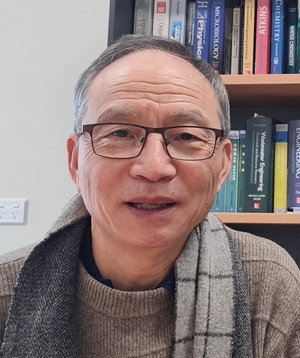
Prof. Jinming Duan
Adelaide University, Australia
Title: AI enables accurate identification of cancer driver genes.
Professor Jinming Duan is currently a Professor of Water Chemistry at Adelaide University. He holds a Ph.D. in Public Health Engineering from the University College London, UK. His teaching and research activities cover a wide range of topics in the areas of water quality and management, as well as water and wastewater treatment.

Professor Duan’s research expertise includes water quality detection and analysis, water and wastewater treatment, reverse osmosis (RO) membrane desalination, colloid and surface chemistry, and mineral processing. His work encompasses the detection of micropollutants, including pesticides, disinfection by-products, and algal toxins, using UPLC-MS/MS, GC-MS/MS. His research also focuses on the removal of micropollutants using advanced oxidation and enhanced coagulation for natural organic removal and disinfection by-products control. In addition, his research activities have extended to the modelling of biological treatment processes, such as nitrification and denitrification, for nutrients removal and wastewater reuse. His publications have been widely cited in the international scientific community. Professor Jinming Duan’s recent teaching responsibilities include courses in Water and Wastewater Treatment and Environmental Pollution Monitoring.
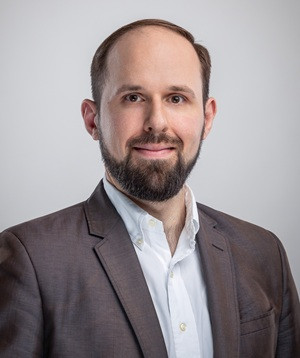
Prof. Dr. Kai S. Exner
University of Duisburg-Essen, Germany
Title: Dynamic Functional Materials under Anodic Polarization
Professor Kai S. Exner is Professor of Theoretical Catalysis and Electrochemistry at the University of Duisburg-Essen, Germany. He holds a Ph.D. in Chemistry from Justus Liebig University Giessen, Germany and conducted postdoctoral research at Ulm University, Germany and at Sofia University, Bulgaria.

Professor Exner’s research addresses the theoretical description of electrochemical processes at solid/liquid interfaces. He combines density functional theory with ab initio molecular dynamics and machine learning techniques to elucidate reaction mechanisms and the formation of active sites under applied bias. On this basis, he predicts trends in the activity, selectivity and stability of electrode materials for electrocatalysis and batteries using microkinetic modeling, data-driven approaches, and descriptor-based analyses. His group studies a broad range of materials and reactions, detailed on its website (https://www.exner-group.com/). Professor Exner serves on the editorial boards of several journals in the field, and his work has been honored with international recognitions including the Materials Today Rising Star Award (2024), the PCCP Emerging Investigator Lectureship (2025), and the Tajima Prize of the International Society of Electrochemistry (2026).
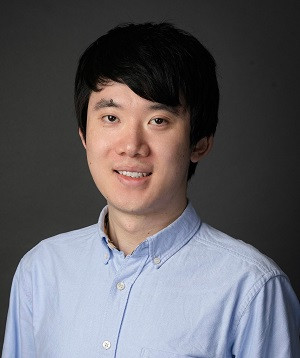
Prof. Zhu Guanzhou
National University of Singapore (NUS), Singapore
Title: Catalytic Electrolyte and Separator Engineering for Durable, High-Rate Zinc-Iodine Batteries
Dr. Guanzhou Zhu is an Assistant Professor (Presidential Young Professorship) in the Department of Chemical and Biomolecular Engineering, National University of Singapore. Dr. Zhu received his BS in chemistry with Summa Cum Laude and departmental highest honor from the University of California, Los Angeles in 2016 and his PhD in chemistry from Stanford University in 2022. During his PhD, Dr. Zhu worked under the supervision of Professor Hongjie Dai on rechargeable batteries, including aluminum, magnesium, sodium, and lithium batteries. After his PhD, Dr. Zhu continued his research on rechargeable batteries as a Postdoctoral Scholar at Stanford University until August 2023. Beginning from September 2023, Dr. Zhu joined Massachusetts Institute of Technology as a Postdoctoral Associate, where he continued his research on rechargeable lithium and sodium batteries under the supervision of Professor Yang Shao-Horn and Professor Ju Li. Dr. Zhu joined the Department of Chemical and Biomolecular Engineering at National University of Singapore in September 2025. To date, Dr. Zhu has published 27 papers, including 9 first and corresponding author papers in Nature, Nature Communications, Journal of the American Chemical Society, and Proceedings of the National Academy of Sciences.